
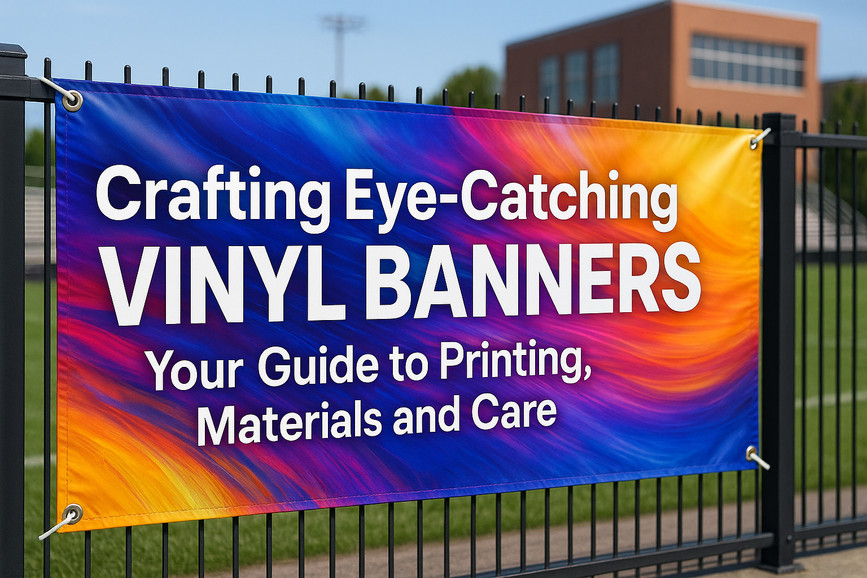
Crafting Eye‑Catching Vinyl Banners: Your Guide to Printing, Materials and Care
1st Dec 2025
Banners are everywhere from high‑streets to conventions, they communicate messages at a glance. Among them, the vinyl banner stands out because it marries affordability with resilience. A modern custom vinyl banner can feature any artwork you imagine thanks to digital printing. Whether you need a custom banner for a trade show, a durable sign for roadside advertising or a party banner for a celebration, understanding how these products are made and cared for will help you choose wisely. This article outlines materials, design considerations, finishing options and care tips so you can get the most from your printed sign.
Outline of the Article
-
What Is a High-Quality Vinyl Banner and How Does Material Choice Matter?
-
What Sizes and Types of Banner Are Available?
-
How Do Design and Templates Influence Your Message?
-
When Would You Use Mesh or Fabric Instead of PVC?
-
Should You Choose Matte or Gloss Finishes?
-
What Finishing Options Are Offered?
-
Do You Need Double‑Sided or Retractable Displays?
-
How Does Digital Printing Work?
-
How Can Banners Support Advertising Goals?
-
How Should You Install and Care for Your Sign?
1. What Is a Vinyl Banner and How Does Material Choice Matter?
Vinyl is a man‑made PVC compound that combines flexibility with strength. As a vinyl material, it resists tearing and UV damage. A vinyl banner material is essentially a sheet of PVC reinforced with a scrim to prevent tearing. The weight of the sheet is expressed in ounces per square yard. A 13 oz sheet of PVC is the industry standard for everyday signage, while 18 ounce products are heavier and suited to extreme conditions. Many 13 oz vinyl banners are light yet strong, and if you need to order a 13 oz banner, this weight is the go‑to choice. When you see references to 13-oz banner options, it refers to this standard weight; the term “oz and 18 oz vinyl” simply compares the two thicknesses. Most suppliers offer both because the lighter sheet is cheaper and easier to handle, whereas heavy‑duty variants last longer. Choosing the right weight depends on weather exposure and how often you plan to move the sign. Because this weight is the most popular vinyl option, it strikes a balance between price and durability. Banners are made from PVC, and a vinyl banner is one of the most versatile marketing tools you can buy.
Material choice also determines whether you can select double-sided printing. Only thicker stock can block light so that graphics on the reverse do not show through. If you need a message viewed from both directions on a street, ask for two‑sided banners. For single‑sided messages, the lighter sheet is adequate. Both weights can be used outdoors because PVC resists rain and UV exposure, so they support outdoor use. Quality manufacturers use UV‑resistant inks, so even a light sheet can remain vivid for years. In other words, there is no single type of banner that fits every scenario; weight and finish depend on where and how you plan to display it.
2. What Sizes and Types of Banner Are Available?
Sizing your sign correctly is critical to readability. Suppliers offer a wide range of sizes, from small desk signs to sheets several metres long. A custom size can be ordered if standard formats don’t suit your location. When selecting dimensions, think about viewing distance and available space. The banner size should reflect both the available area and how far away viewers will stand – an oversized display can dominate a narrow wall, while a tiny sign might be overlooked. For example, a two‑metre sign above a shop entrance needs large lettering, whereas a small sign at a booth can be more compact. Many providers also sell blank vinyl banner stock so you can apply your own graphics or paint. Ordering a blank sheet allows artists to create one‑off designs or craft a vinyl banner from scratch.
Besides size, consider the banner type. Standard vinyl banners are single‑sided and designed for short‑ to medium‑term use. Reinforced vinyl banners are thicker and often include additional UV inhibitors. Outdoor vinyl banner products may incorporate block-out vinyl, an opaque layer that prevents light shining through and is essential for double‑sided signs. You might invest in a dedicated outdoor banner for a long‑term road sign. If you plan to mount your sign across a roadway, ask if the supplier can provide a stand for banners or hardware for street poles. If the display must be flexible and portable, think about retractable systems (discussed later). A vinyl sign can also refer to adhesive lettering applied to windows or walls, adding another dimension to your options.
3. How Do Design and Templates Influence Your Message?
Good banner design turns a sheet of material into a compelling advertisement. Start by selecting a high‑contrast colour scheme and a legible font. Many companies provide banner templates and design templates to help you place text and images effectively. If you’d rather create your own artwork, an online design tool allows you to drag and drop elements. When you upload your design, ensure it matches the required dimensions and resolution. To simplify the process, some services offer a complete printing service for banners that includes artwork checks and minor adjustments. Alternatively, if you need to reproduce artwork at scale, you can print custom vinyl banners in bulk; digital printing makes small runs affordable. These online tools make it easy to create custom banners tailored to any occasion.
Don’t crowd your sign. Leave margins so the seam or grommet placement doesn’t obscure important details. A matte finish helps reduce glare under strong lights and is often chosen for indoor presentations, whereas gloss can make colours pop. For exterior applications, a premium vinyl stock with a protective coating guards against scratches. If you need a reflective surface, ask if your printer offers speciality materials. No matter which style you select, use a consistent layout; a disorganised design will undermine your message.
4. When Would You Use Mesh or Fabric Instead of PVC?
While vinyl is the most common substrate, there are situations where alternatives perform better. A mesh banner is made from perforated PVC that allows air to pass through; this reduces wind load and makes it ideal for construction fences or stadium railings. In a gale, mesh will flap but is less likely to tear. Fabric banners, often printed on polyester via dye‑sublimation, deliver vibrant colours and a soft look. Because they are lightweight, fabrics drape elegantly at conferences and are easy to transport. A blank banner made of fabric can also serve as a backdrop for art installations. The trade‑off is durability: textiles aren’t as water resistant as PVC, so they belong indoors.
You might also encounter standard vinyl signs combined with fabric table throws at a trade show. Mixing materials can create contrast: a tough PVC sign above eye level and softer fabric at the table. If your event demands full weather exposure, stick with vinyl; if aesthetics matter more and the environment is controlled, fabric is the way to go. When ordering banners online, consider whether you need indoor or outdoor versions; the site should let you choose materials suitable for indoor and outdoor environments.
Purchasing these signs through a website also gives you access to a broader range of sizes and finishes than a local shop can provide.
5. Should You Choose Matte or Gloss Finishes?
Choosing between matte and gloss affects how your message is perceived. Suppliers offer matte film surfaces that minimise reflections – useful in photos or under stage lighting. Matte vinyl surfaces in particular have a soft appearance and reduce glare, making them ideal for indoor exhibitions. A gloss layer enhances saturation and draws attention outdoors. Some companies market premium vinyl with UV‑blocking films; this prolongs life and is worth considering for long‑term displays. When you order a 13‑ounce banner, ask whether the ink sits on a satin, gloss or matte coating. Alternatively, you might select a matte surface with a texture that diffuses light or choose a semi-gloss compromise.
Finishes aren’t just about sheen; they influence durability too. Some signs include a scratch‑resistant laminate, and others are printed directly onto the substrate. Always specify where the sign will hang: direct sunlight, under artificial lights or in a hall. Combining a flat finish on one side and gloss on the other is an option for double‑sided products. The diversity of finishes ensures that regardless of application, there is a coating to suit.
6. What Finishing Options Are Offered?
How you mount your sign determines which finishing method you need. The most common reinforcement is a hem, created by folding the edge back on itself and bonding it. Many suppliers use a heat welded seam because it fuses the layers together and resists fraying. Along this edge, brass grommets – also called eyelets – are inserted every 60–120 cm. Ropes or zip ties pass through these holes. Using all the grommets spreads the load and prevents tearing. If your sign hangs between two posts, consider adding a pole pocket – a sleeve that accepts a pole – on the top or bottom. Remember that grommets or pole pockets must be chosen; they cannot be combined on the same edge.
Reinforcements are available for larger signs. Some manufacturers add webbing for strength or triangular patches at the corners. If you order a robust vinyl product longer than five metres, ask for reinforced edges. Also consider the edges of your banner; sharp corners can whip in the wind, so rounding them can reduce stress. When hanging across a road, secure the top of the banner with several fasteners and add weights to the bottom to minimise flapping. These finishing details make installation easier and extend the life of your sign. For a large banner, reinforcements are essential to withstand wind and weather.
7. Do You Need Double‑Sided or Retractable Displays?
Sometimes a single‑sided sign isn’t enough. If your message must be read from both directions, select printing on both sides, which sandwiches an opaque layer between two prints. Two‑sided banners are common on street poles or hanging in the centre of a shop. Because two prints require a thicker substrate, they are offered only on 18 oz stock. Alternatively, a retractable banner system stores the sign in a base and pulls it up like a window shade. Retractable units come with a banner stand and carrying bag; they’re popular at exhibitions because they assemble quickly and protect the print during travel. If you need to update your artwork regularly, a retractable system allows you to swap the graphics without replacing the hardware. In other cases, double-sided banners provide full visibility to passing traffic.
Other hardware options include X‑stands, L‑stands and hanging rails. For exterior use, ask your supplier about wind‑rated stands that won’t tip. For a child’s party you might opt for a disposable cardboard stand. Always consider how the display will be used and whether portability is important before committing to a system.
8. How Does Digital Printing Work?
Understanding the printing process demystifies why these signs are so resilient. Modern vinyl banner printing uses large‑format inkjet presses with UV‑curable inks. According to Signs.com, their printers use a four‑colour process and weather‑resistant UV ink. Inks cure instantly under UV light, bonding to the PVC. This means the sheets are produced without plates, so custom artwork is economical. The same equipment can print banners in small batches or large runs. During production, the design file is checked for resolution, the sheet is fed through the machine and colours are applied in layers. After printing, the sheet moves to the finishing station where the edges are hemmed and eyelets added. A high‑resolution banner print ensures crisp details and vibrant colours, and vinyl banners are printed using modern digital equipment that sprays UV‑cured inks directly onto the material. For long‑term durability, some banners are printed on heavy-duty vinyl that withstands wind and weather, so they last longer outdoors.
Because full-color printing is standard, the number of colours in your design does not affect price. The signs are printed on heavy-duty media that resists tearing. Many suppliers state that their vinyl banners are digitally printed using eco‑friendly inks and high‑resolution files that you can prepare in any graphics program. If you need advice on file formats or bleeds, contact your printer. A good banner printing service provides templates, proofing and guidance so your job prints correctly.
9. How Can Banners Support Advertising Goals?
When used thoughtfully, a printed sign can deliver more than just information. Banners for advertising draw eyes to promotions, directions or brand messages. To maximise impact, keep your wording concise and legible. High contrast ensures readability from a distance. Include your logo or a simple call to action. Use imagery sparingly – a crowded design can confuse viewers. Because these displays are relatively inexpensive, you can update them regularly; seasonal promotions, grand openings or directional signs are all easy to change. When placed near roads or in busy halls, signs catch passing traffic and banners deliver information quickly. Custom outdoor banners can be tailored to unusual spaces and weather conditions, ensuring your message endures.
A premium banner signals professionalism and gives prospective customers confidence in your brand.
Many products come with extra features. For instance, some banners include wind slits or weighted corners, though experts caution that cutting slits weakens the sheet. A banners feature might be reflective ink for night visibility. Another is weatherproof lamination; banners are waterproof by default because PVC repels moisture, but a laminate protects the ink if the sign is washed. Even with these enhancements, banners are perfect for short campaigns because they balance price and durability. Think about the banner you need – is it a one‑off event sign or a brand display that stays up for months? Your answer will drive material and finish choices.
For permanent installations or high‑wind sites, heavy-duty vinyl offers extra strength; this thicker material resists tearing and is ideal for long-term banners.
Banners are a great way to attract attention at fairs, markets and storefronts, especially when you invest in a premium banner that resists fading.
10. How Should You Install and Care for Your Sign?
Hang your banner by using all the grommets to distribute the load and keep the sheet taut.
Quality products are designed to last, but care is still important. When your order arrives, check that all grommet holes are intact. To hang, thread rope or use zip ties through every eyelet; this distributes stress evenly. Avoid hanging by only two corners because the edge of the banner could tear. If you chose pole pocket finishing, slide the sleeve onto a dowel and mount securely. For blank art sheets, clamp them evenly along the top rail. After installation, monitor the fasteners; banners may loosen if weather changes.
Cleaning and storage help signs last. Use a mild soap and water to remove dirt and avoid abrasive brushes. When not in use, roll the banner with the print facing out and secure it with elastic bands. Store the roll in a cool, dry area away from sunlight. Doing so will ensure your banner looks bright for the next event. If you must transport it, pack it in a tube to prevent creasing. These simple actions will keep your banner vibrant and help banners stay in good condition for multiple uses. Suppliers note that banners are designed to endure for years regardless of the size; following care instructions prolongs that life.
Summary of Key Points
-
PVC sheets come in standard weights of 13 oz and 18 oz; heavier stock supports longer life and printing on both sides.
-
Vinyl is waterproof and resists UV degradation; a premium laminate can extend life further.
-
Finishing options include folded edges, grommets, pole pockets and reinforced corners; choose based on how and where you will hang the sign.
-
Digital custom printing uses UV‑cured inks, enabling affordable short runs and full‑colour reproduction.
-
Alternate materials such as mesh signs for wind and fabric displays for indoor elegance expand your options.
-
Suppliers offer standard vinyl signs and heavy‑duty variants, with hardware like retractable stands for portability.
-
Many banners are available as blanks so you can paint or vinyl‑cut your own design.
-
Take time to select the right printing service for banners that suits your needs; professional support ensures your banners made are effective.