
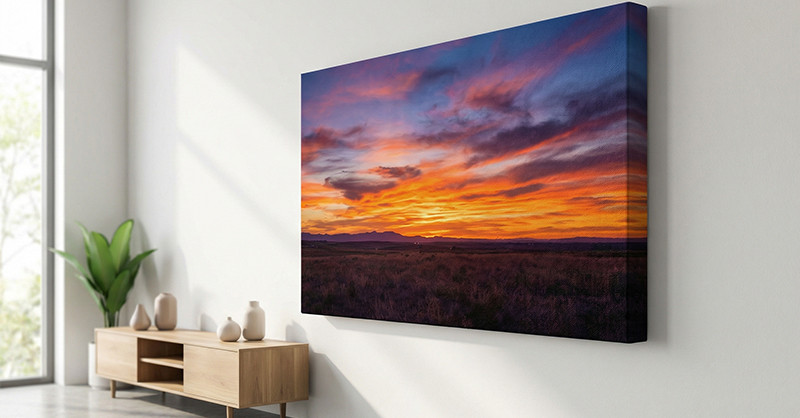
Canvas Print Options: Gallery Wrap & Canvas Gallery Wrap
Posted by Octo Prints Team on 24th Feb 2026
You've got the perfect photo, maybe a family portrait from last Thanksgiving, a sunset you shot on vacation, or a piece of digital art you commissioned. Now you want it on your wall. You start looking into options and immediately hit a wall of jargon: gallery wrap, standard wrap, fold edges, mirror edges, stretcher bars. Which one do you actually need?
This guide breaks down the differences so you can make a confident decision without overpaying or ending up with something that doesn't match your space.
TL;DR: Quick Summary
- Gallery wrap uses a thicker 1.5" solid wood frame with the image printed around the edges, no external framing needed.
- Standard canvas wrap uses a thinner profile (typically under 1") with the same edge options but less visual depth.
- The most important decision is your edge finish: fold (image wrap), mirror, solid black, or solid white.
- Our custom canvas wraps start at $29.99 with all four finishes included at no extra charge and a hanging kit in every box.
- For best results, upload images with at least 150-300 DPI at the final dimensions.
What Is a Canvas Print?
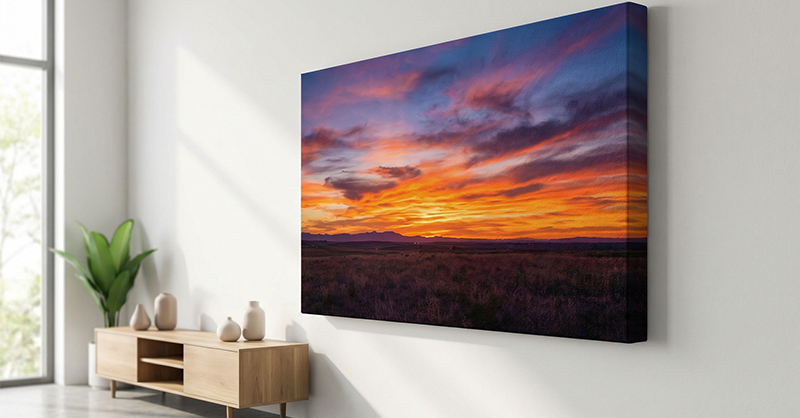
A canvas print reproduces your photo or artwork on premium canvas material using archival inks, then stretches it tightly over a rigid structure. The result looks and feels like a painting: textured surface, vibrant colors, no glass, no glare. The image is printed using full-color CMYK inkjet technology onto a polyester-cotton blend that gives even smartphone photos an elevated, fine art canvas quality with a subtle woven texture.
Most options arrive ready to hang with hanging hardware already included, making them easy to hang without additional purchases. That convenience, combined with a high quality appearance, scratch resistant surface, and archival-quality durability, is why this format has become the most popular choice for wall art.
Gallery Wrap vs. Standard Canvas Wrap
These terms get used interchangeably online, but there is a real difference that affects how your finished piece looks on the wall.
Canvas Gallery Wrap (1.5" Depth)
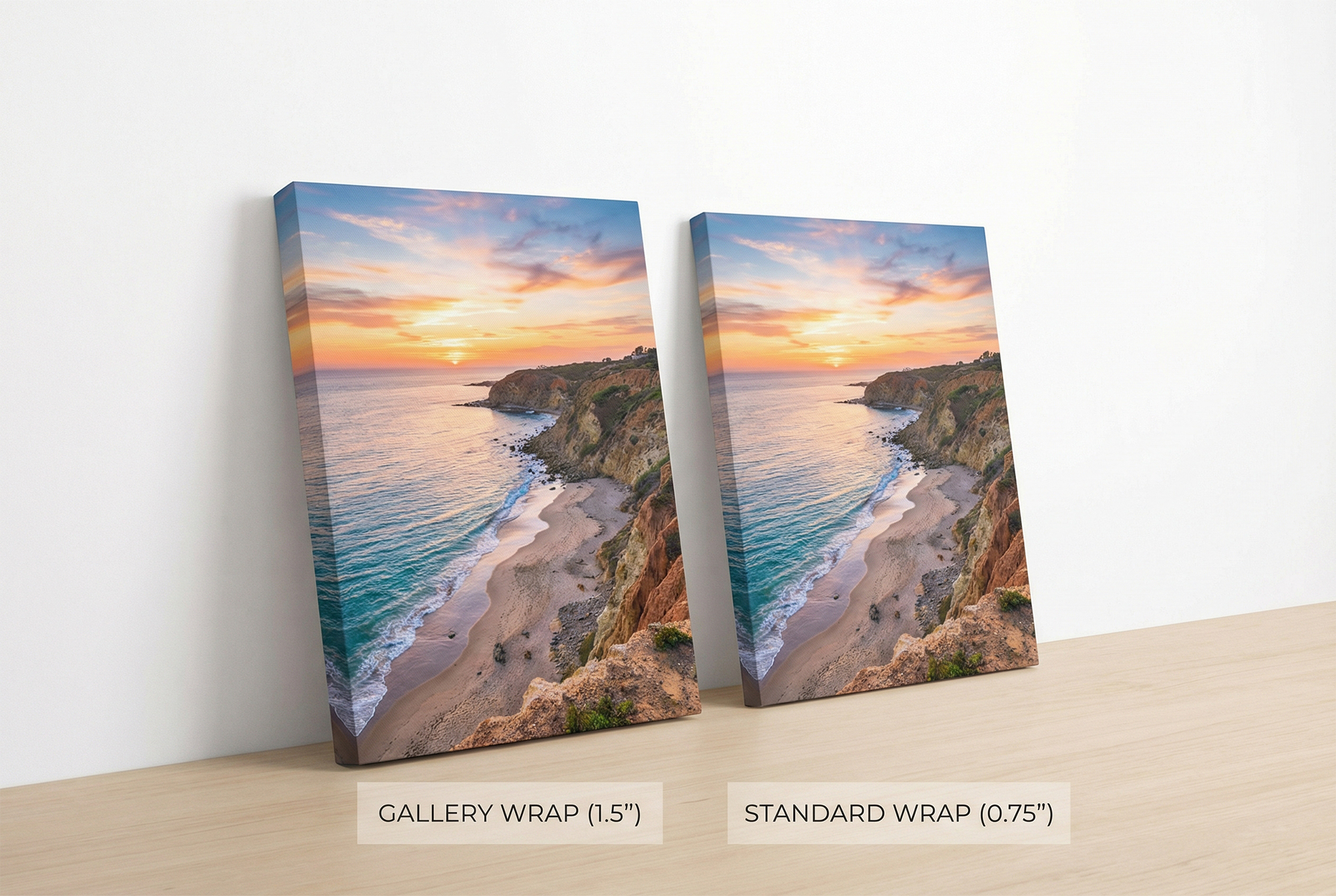
A gallery wrapped canvas is hand-stretched over a thicker solid wood frame, typically 1.5 inches in thickness, with the artwork extending around the edges on all four sides. The design will wrap around the sides of the bars, creating a substantial three-dimensional appearance. When viewed at an angle, you see a continuation of the artwork rather than a raw edge.
The name comes from art galleries, where this presentation allows pieces to be displayed without additional framing. The thick profile creates a "floating" effect that draws attention and adds visual weight, delivering a hand stretched result with perfection in tension and longevity.
Our canvas gallery wrap products use the full 1.5-inch depth as standard on every offering, from 8x10 up to 32x48.
Standard Wrap (Under 1" Depth)
A standard option follows the same construction principle but uses a thinner profile, usually 0.75 inches or less. It sits closer to the wall and creates a more understated presentation in standard sizes. Some people prefer this for smaller pieces or when hanging multiple items in a tight cluster.
Standard options are typically less expensive because they use less material. However, the trade-off is a lighter feel and less visual impact, particularly at larger dimensions where the thin profile can look flimsy.
Which Should You Choose?
For most applications, gallery wrap is the better choice. The 1.5-inch depth provides a museum-quality appearance and is sturdy enough to maintain its shape for years without warping, especially important for larger pieces (18x24 and above) where thinner construction can bow or flex.
Understanding Your Edge Finish Options
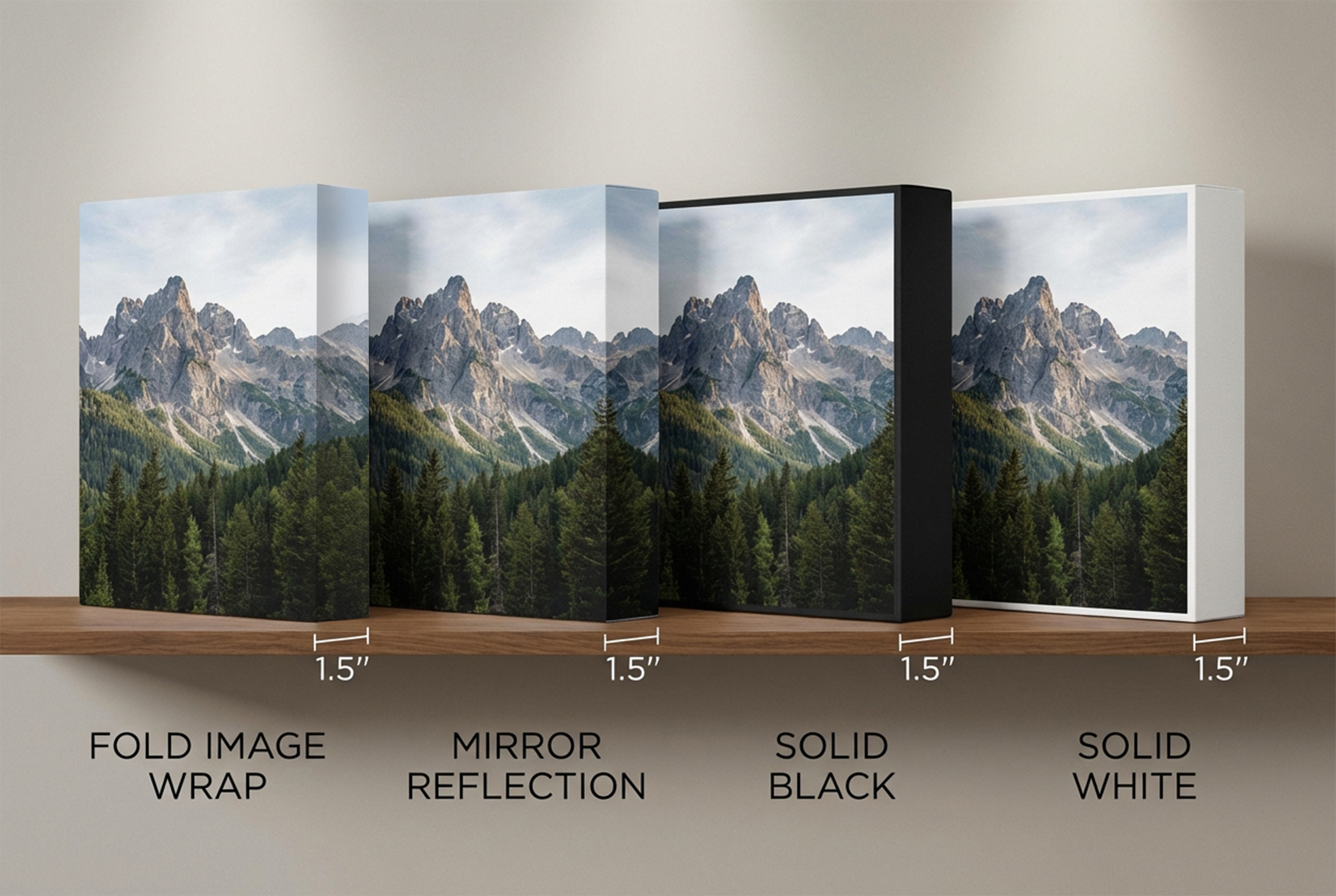
The edge finish determines what appears on the 1.5-inch sides, the part visible when someone views the artwork from an angle. It's the most visually impactful decision you'll make when ordering.
Fold (Image Wrap)
The artwork continues around all four sides, creating a seamless look. This works best when your image has non-essential content near the borders: landscapes, abstract art, and wide-angle photos are ideal. Approximately 1.75 inches on each side will fold around the structure, so avoid this if critical details sit close to the edges.
Mirror
The pixels along each edge are reflected outward, creating a mirrored border. This preserves your full image on the face while giving the sides an artistic appearance. Mirror works particularly well with landscapes, nature photography, and organic patterns.
Solid Black
A clean black border that resembles a traditional wood frame. Black edges add contrast and definition, excellent for colorful images, portraits, and professional displays.
Solid White
Solid white for a modern, minimalist aesthetic. White edges work beautifully in contemporary spaces, and this is the preferred option for fine art canvas photography, wedding photos, and minimalist interiors.
At Octo Prints, all four finishes, including black or white, are included at no extra charge. Many competitors charge $5-15 extra, so check their pricing before ordering elsewhere.
How to Choose the Right Size
Choosing the wrong dimensions is the most common regret after ordering. Beyond aesthetics, your custom size selection directly affects pricing. Here's a practical guide:
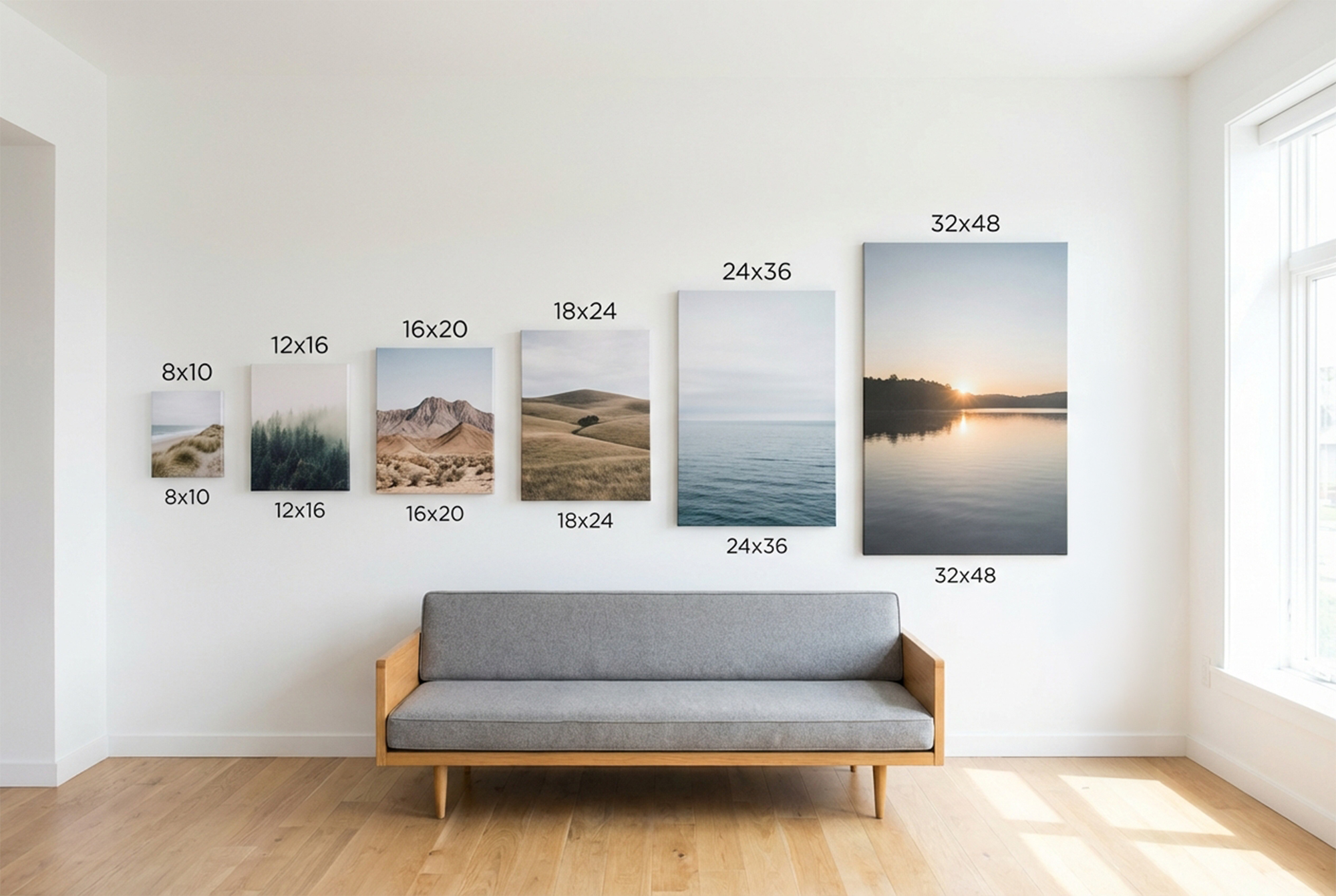
General Sizing Rules
Fill two-thirds to three-quarters of the available wall width. Hanging above a 60-inch sofa? Aim for 40-48 inches wide. For a narrow hallway that's 36 inches across, a 24-inch piece hits the sweet spot.
Leave 6-10 inches between furniture and the bottom edge. Hanging too high is the number-one placement mistake. The center should sit at roughly eye level, about 57-60 inches from the floor.
Our Available Sizes
We offer 12 popular canvas options:
| Dimensions | Best For | Orientation |
|---|---|---|
| 8x10 | Desktops, shelves, wall clusters, gifts | Portrait |
| 11x14 | Small walls, bathrooms, bedside tables | Portrait |
| 12x12 / 16x16 / 24x24 | Instagram photos, symmetrical arrangements | Square |
| 12x16 / 12x18 | Accent walls, entryways, hallways | Portrait or Landscape |
| 16x20 / 16x24 | Living rooms, bedrooms, above furniture | Portrait or Landscape |
| 18x24 | Offices, dining rooms, prominent decor walls | Portrait or Landscape |
| 24x36 | Large living rooms, above sofas, feature walls | Landscape |
| 32x48 | Statement walls, lobbies, commercial spaces, photographer studios | Landscape |
Materials and Construction
Not all products in this category are created equal. The materials directly affect how your artwork looks on day one and its durability over the years.
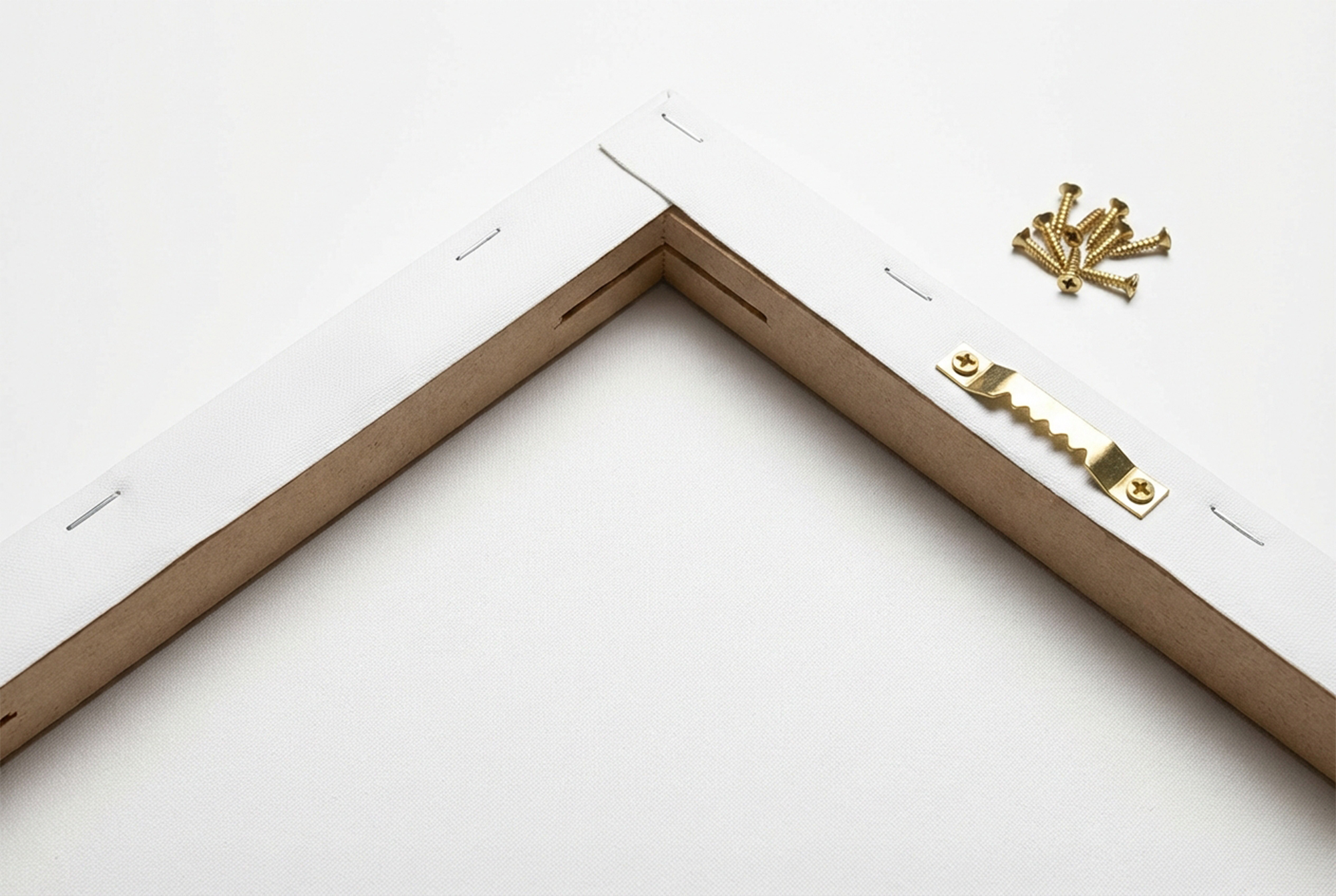
Premium Canvas Material
We use a white semi-gloss art canvas, a premium canvas material engineered for large-format digital output. Some providers offer a satin finish instead, which has a slightly softer sheen. The semi-gloss surface deepens colors and sharpens detail without mirror-like reflections. A protective laminate coating is applied to ensure the printed image is scratch resistant, fade resistant, and protected from UV light, giving you a high quality canvas that holds up in bumper-to-bumper shipping and everyday conditions.
Construction
The bars hold everything taut. High-end providers typically use a solid wood frame (pine or poplar) with hand-stretched mounting. Our products use MDF structures that provide uniform density, consistent dimensions, and excellent warp resistance. Either way, look for 1.5-inch thickness to ensure your piece has substance on the wall.
Archival Ink
Full-color CMYK digital output using Epson archival-grade inkjet ink delivers vibrant color reproduction that resists fading. These formulations are rated for decades of indoor display without significant color shift. Some providers also offer color correction services to optimize your image to create the best possible result.
Hanging Hardware
Every order ships with a complete kit: brass sawtooth hangers and screws included. Some providers include a wire hanger instead, which works well for heavier pieces but requires two wall anchors. Our system needs just one nail, making mounting and installation simpler.
Preparing Your Image
Resolution Requirements
For optimal results, your source file should be at least 150-300 DPI at the final dimensions. You may need to resize your file for larger pieces:
| Dimensions | Minimum Pixels (150 DPI) | Recommended (300 DPI) |
|---|---|---|
| 8x10 | 1,200 x 1,500 | 2,400 x 3,000 |
| 16x20 | 2,400 x 3,000 | 4,800 x 6,000 |
| 24x36 | 3,600 x 5,400 | 7,200 x 10,800 |
| 32x48 | 4,800 x 7,200 | 9,600 x 14,400 |
Most modern smartphones shoot at 12+ megapixels, which comfortably covers dimensions up to 24x36 at 150 DPI. For 32x48 pieces, a DSLR or mirrorless camera is recommended.
File Format and Upload
Submit your file as a JPEG or PDF in CMYK color space. If you're working in RGB (most phone photos are), the system handles conversion automatically. Maximum upload limit is 300MB. Online ordering is simple: upload your file, choose your options, and the preview shows exactly how your finished piece will look.
Bleed for Fold Edges
If you choose the fold finish, approximately 1.75 inches of content on each side will wrap around the edges. A 12x12 piece with fold edges requires a 15.5x15.5 inch source file. If your photo doesn't have this extra content, choose mirror, black, or white edges to keep the full image around the face intact.
Uses: From Home Decor to Professional Spaces
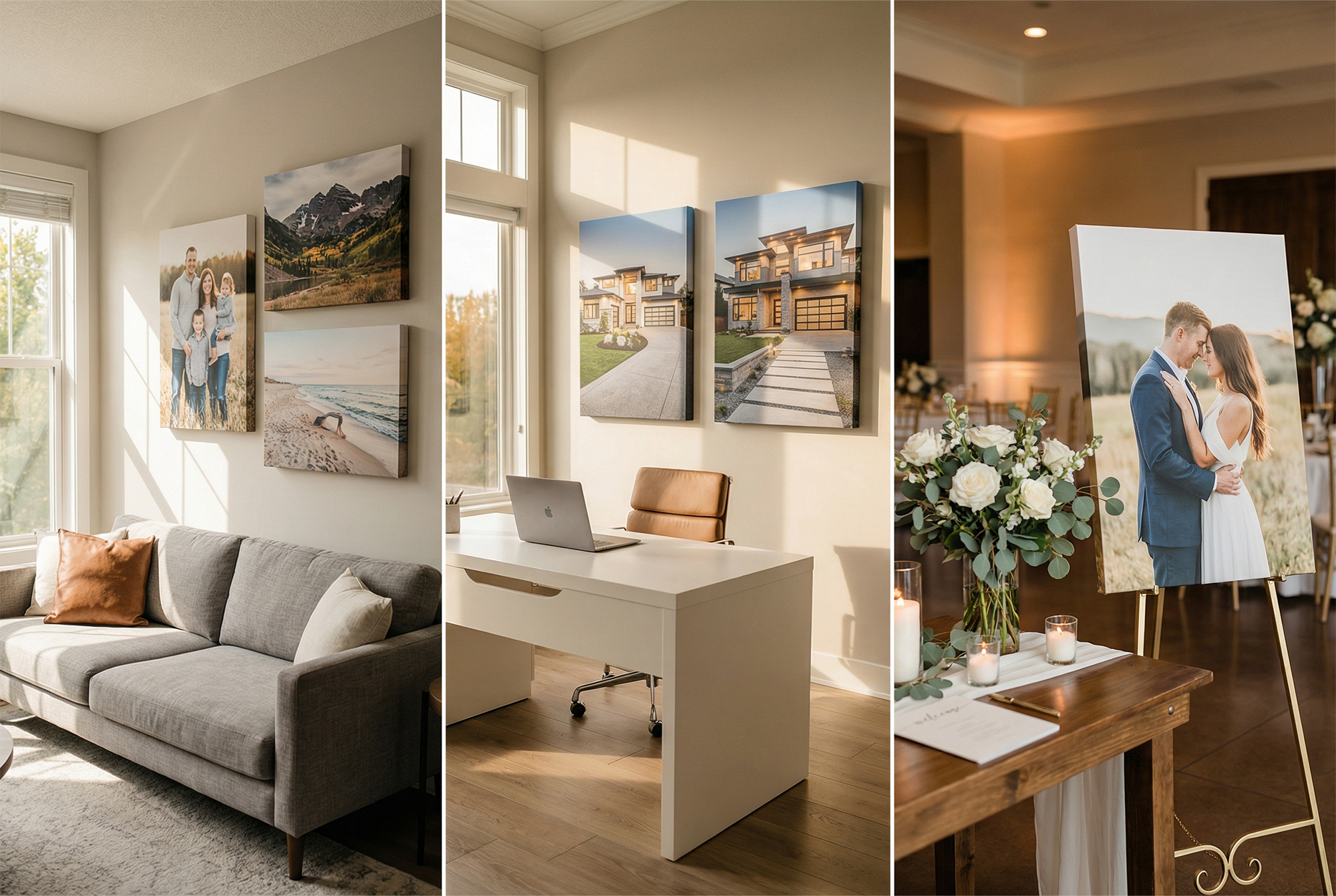
For Your Home
Family portraits, vacation landscapes, pet photos, children's artwork: turn everyday memories into stunning displays. Create a collage arrangement with multiple smaller pieces or make a single large statement as the focal point of your living room. The frameless look complements modern, farmhouse, minimalist, and transitional interior styles.
For Your Business
Real estate agents, salons, restaurants, dental offices, and retail stores use these for branded wall displays, portfolio showcases, and atmosphere-setting decor.
For Photography Studios
Photographers order wrap canvas products for client deliverables, studio samples, and shows. The semi-gloss finish reproduces photographic detail faithfully, and the 1.5-inch depth gives each piece the weight and presence clients expect.
For Weddings and Events
Engagement photos displayed on an easel at welcome tables, memorial portraits, and event signage: these add a personal, elevated touch that becomes a lasting keepsake.
Looking for additional products? Pair your order with our custom posters, banners, or wall art for a cohesive visual presentation.
How to Care for Your Artwork
Placement: Avoid direct sunlight or rooms with excessive humidity. UV light causes gradual fading, and humidity can loosen tension over time. Lamination helps, but proper placement maximizes longevity.
Cleaning: Dust every few months with a soft, dry microfiber cloth. For stubborn marks, lightly dampen the cloth with water only. Never use household cleaners or solvents.
Handling: Hold by the edges rather than pressing against the face. The protective surface handles normal wear, but fingerprint oils can leave marks on semi-gloss finishes if handled roughly.
FAQs
What is the difference between gallery wrap and standard wrap?
The gallery option uses a thicker structure, typically 1.5 inches deep, creating a more substantial, three-dimensional appearance. Standard options use thinner construction (usually under 1 inch). The deeper profile is preferred for frameless display because it delivers print quality you can see from across the room.
What edge finish should I choose?
Fold works best for landscapes and photos with non-critical content near the borders. Mirror is ideal for nature shots. Black adds classic contrast for portraits. White creates a clean, modern feel. All four are included free with every Octo Prints order.
What resolution do I need?
Minimum 150 DPI at the final dimensions. For an 8x10, that's at least 1,200 x 1,500 pixels. For a 24x36, you'll need 3,600 x 5,400. Most modern smartphone cameras produce files large enough for pieces up to 24x36.
Do they come ready to hang?
Yes. Every order from Octo Prints ships with hardware: sawtooth hangers and screws in the box. They're easy to hang in under five minutes with a single nail.
How thick is it?
Our products use a 1.5-inch depth MDF structure, the industry standard for museum-quality presentation. This creates a noticeable floating effect and looks substantial at every custom size.
Can I add a traditional frame later?
Yes. Floating frames designed for stretched artwork attach to the sides and add an elegant border while maintaining the three-dimensional look. However, most customers find the presentation looks complete without additional framing.
How long will it last?
With proper care, pieces using archival inks maintain vibrant colors for 20+ years. The MDF construction resists warping, and the laminate finish adds durability and surface protection. This is why photographers and designers continue to choose this format.
What sizes and pricing are available?
We offer 12 standard sizes from 8x10 to 32x48, with pricing starting at $29.99. Need a custom size? Contact us to discuss requirements and pricing for your project.
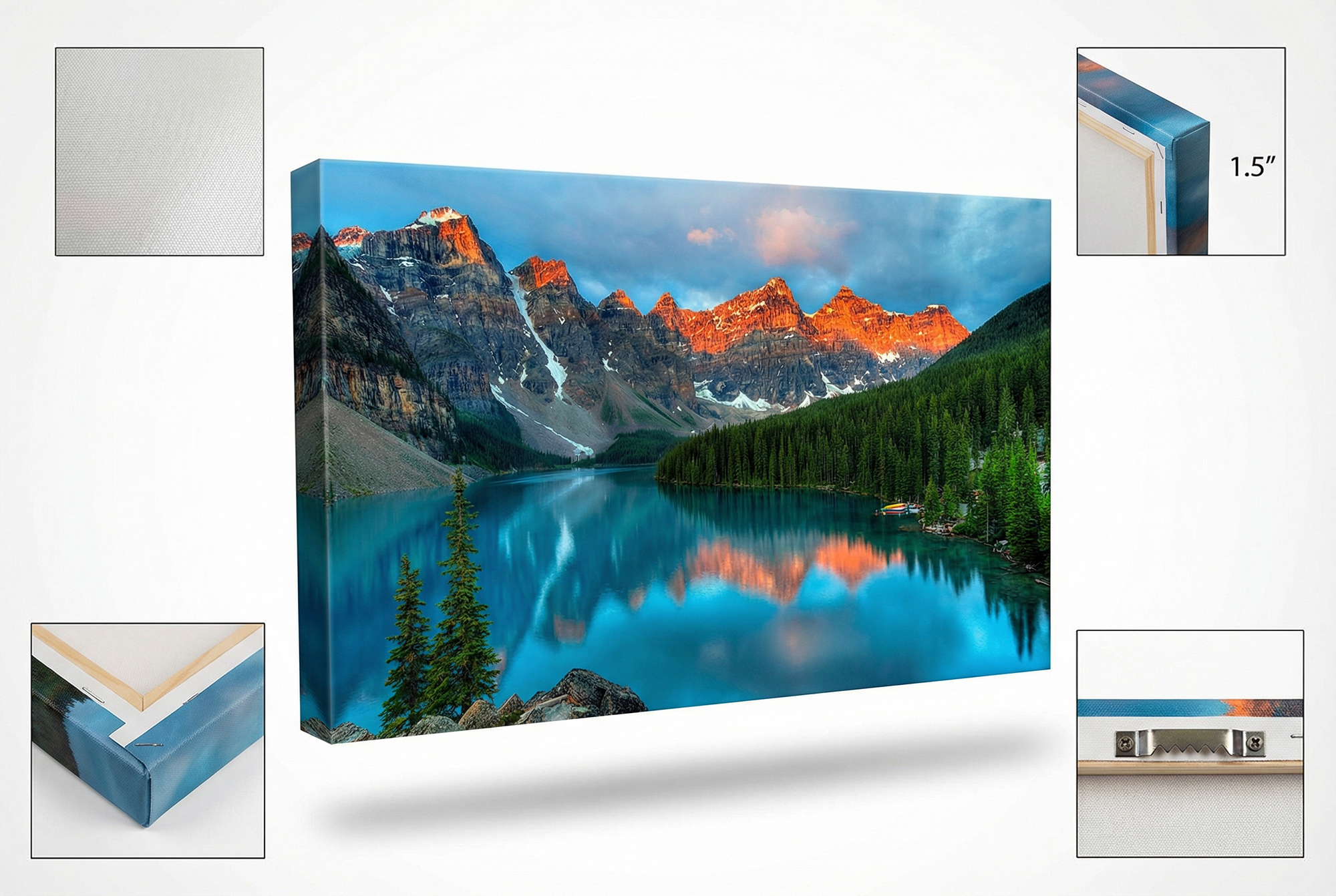
Ready to Turn Your Favorite Photo into Wall Art?
Starting at $29.99. Free edge finishes. Hanging kit included. 12 sizes available.